LUPE

The project explores memory, tradition, and the sense of belonging by bringing together contemporary photographs and family archives. It highlights the role of analog photography in shaping both personal and collective stories.
Inspired by the annual pilgrimage to the Basilica and the popular devotion to Our Lady of Guadalupe, the project revisits one of the most important symbols of Mexican culture from a contemporary perspective.
The images of the pilgrims, seen as places of movement, memory, and ritual, are combined with family archive photographs, blending the boundaries between personal and collective experience. The analog collages, created through multiple exposures with a 6×6 medium-format camera, become a metaphor for Mexican identity: something built from memories, symbols, stories, and many cultural layers. Together, the images invite viewers to reflect on the meaning of these symbols and their role in shaping identity.
A key inspiration for the project's process and presentation was Mexican muralism and the work of muralists such as Diego Rivera, José Clemente Orozco, and David Alfaro Siqueiros. In their work, large-scale murals made it possible to bring together multiple stories, historical moments, and different perspectives on life in Mexico within a single image.
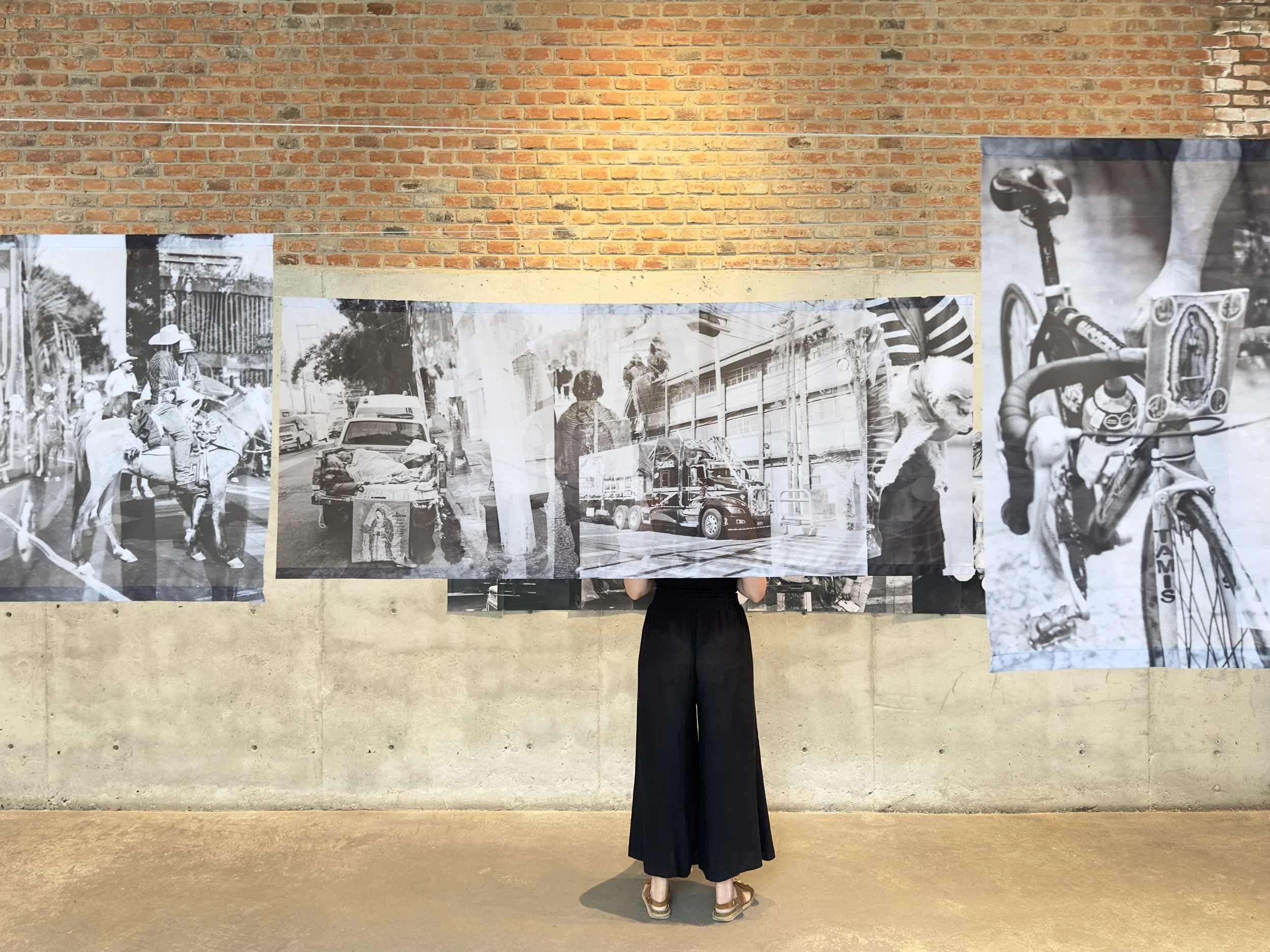
Fundacion Casa Wabi, Mexico City 2026
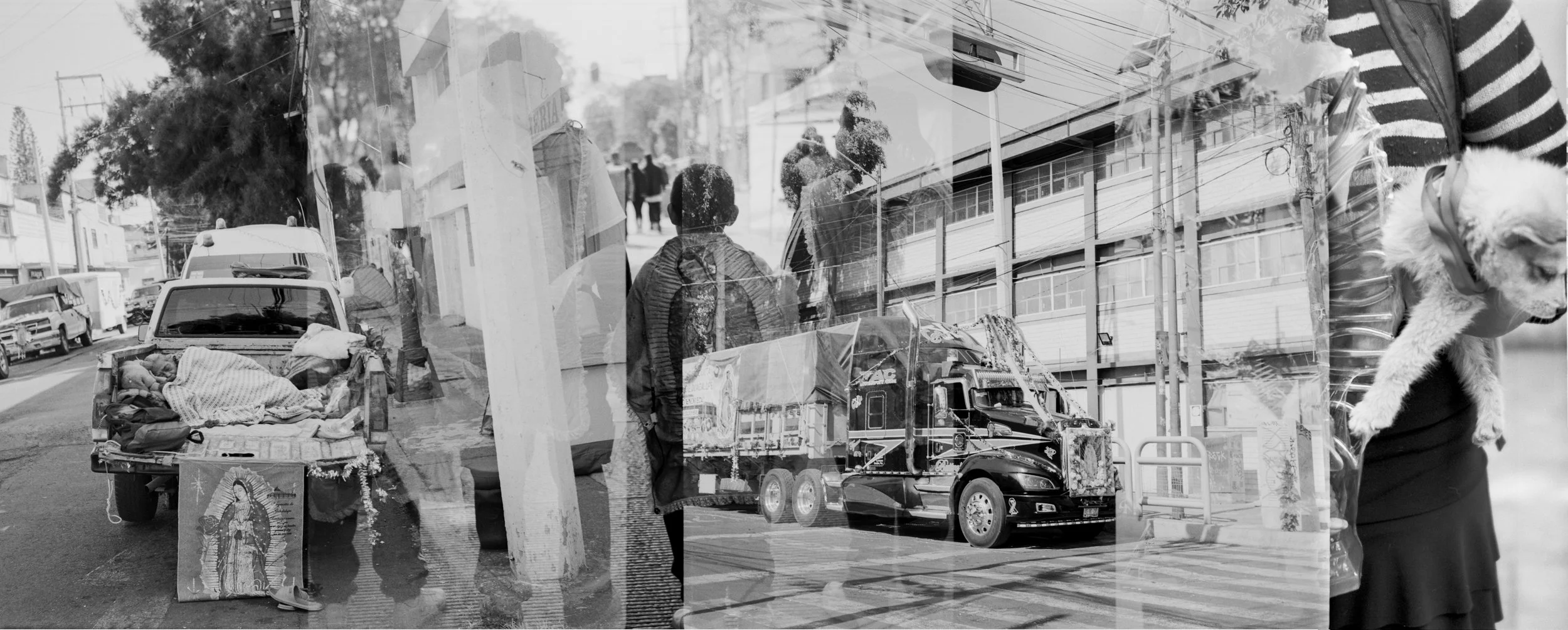

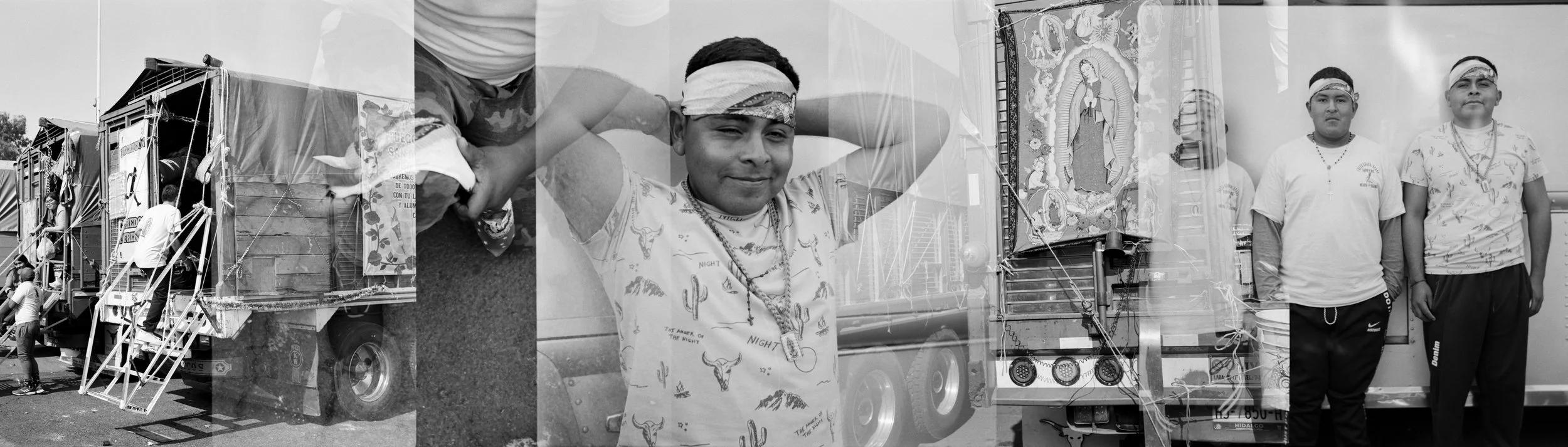
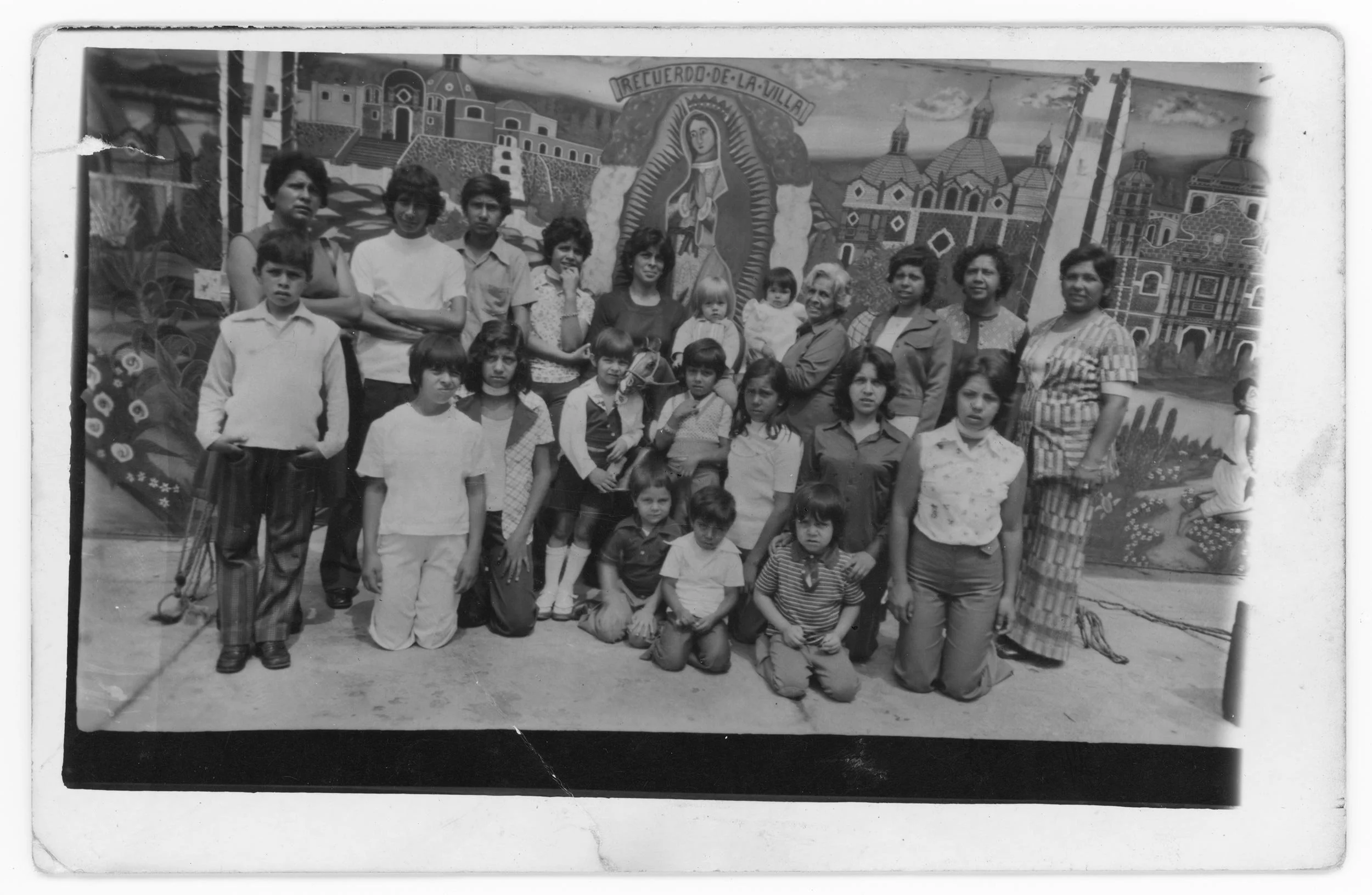
This idea of creating a complex image, where different narratives coexist at the same time, is closely connected to the project's intention of building a fragmented and layered representation of identity.
The religious image of the Virgin of Guadalupe is more than just a symbol – it is an emblem of Mexican identity for Mexicans. The Mexican people have embraced the image of the Virgin of Guadalupe as a national symbol. Both believers and non-believers identify as Mexicans through this image, which belongs to the Catholic religion introduced by the Spaniards. This faith replaced the ancient polytheistic practices of the ancestral cultures that inhabited pre-Hispanic Mexico.
These trucks, which serve as the „frontline“ of the pilgrimage, transport their belongings, such as food, clothing, and blankets for sleeping. Often, these trucks are also used to allow women or children accompanying them to rest.
If you are interested in viewing the complete project for exhibition or publication purposes, please request the password at the following email:
villegasvea@googlemail.com
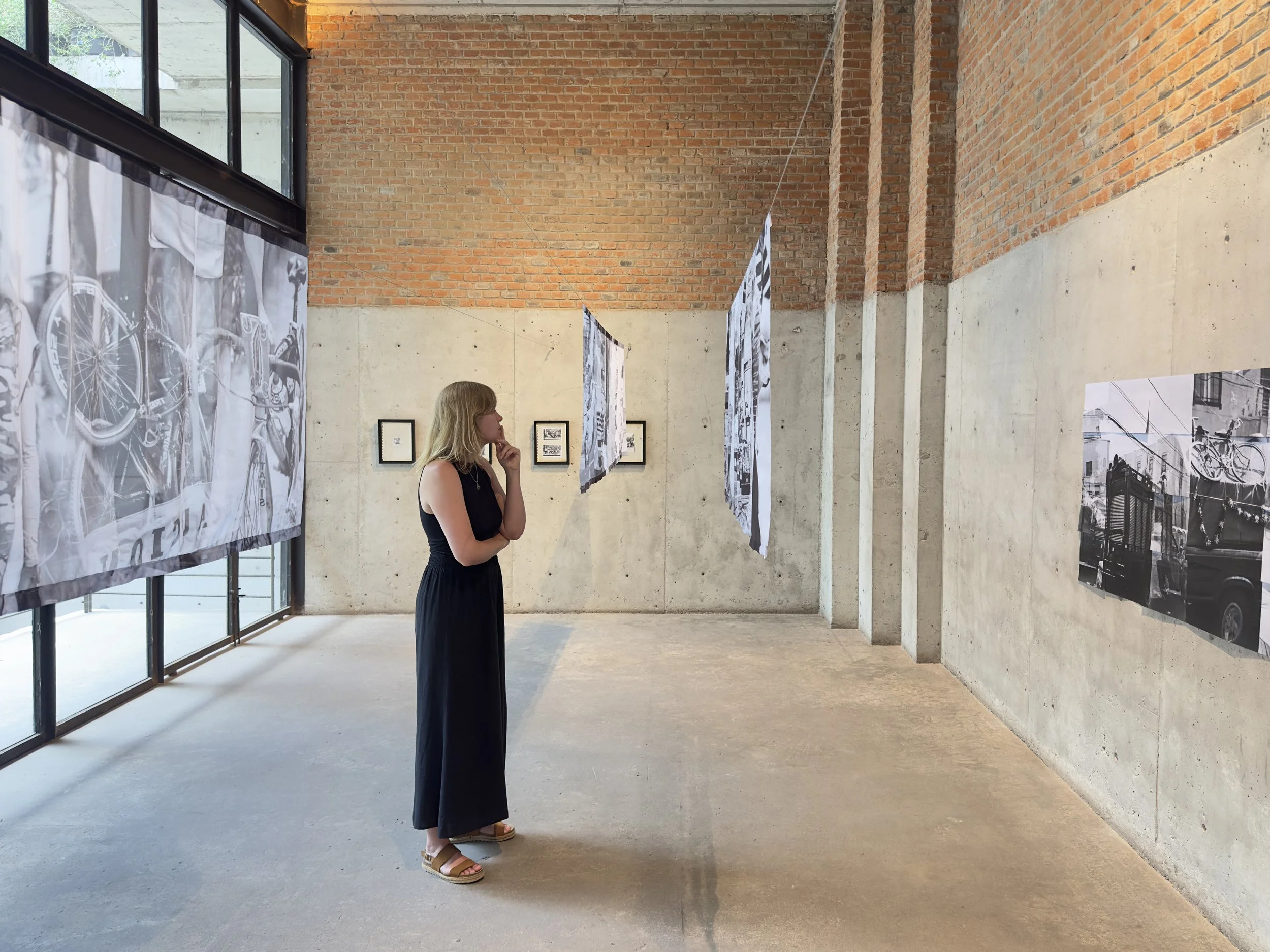
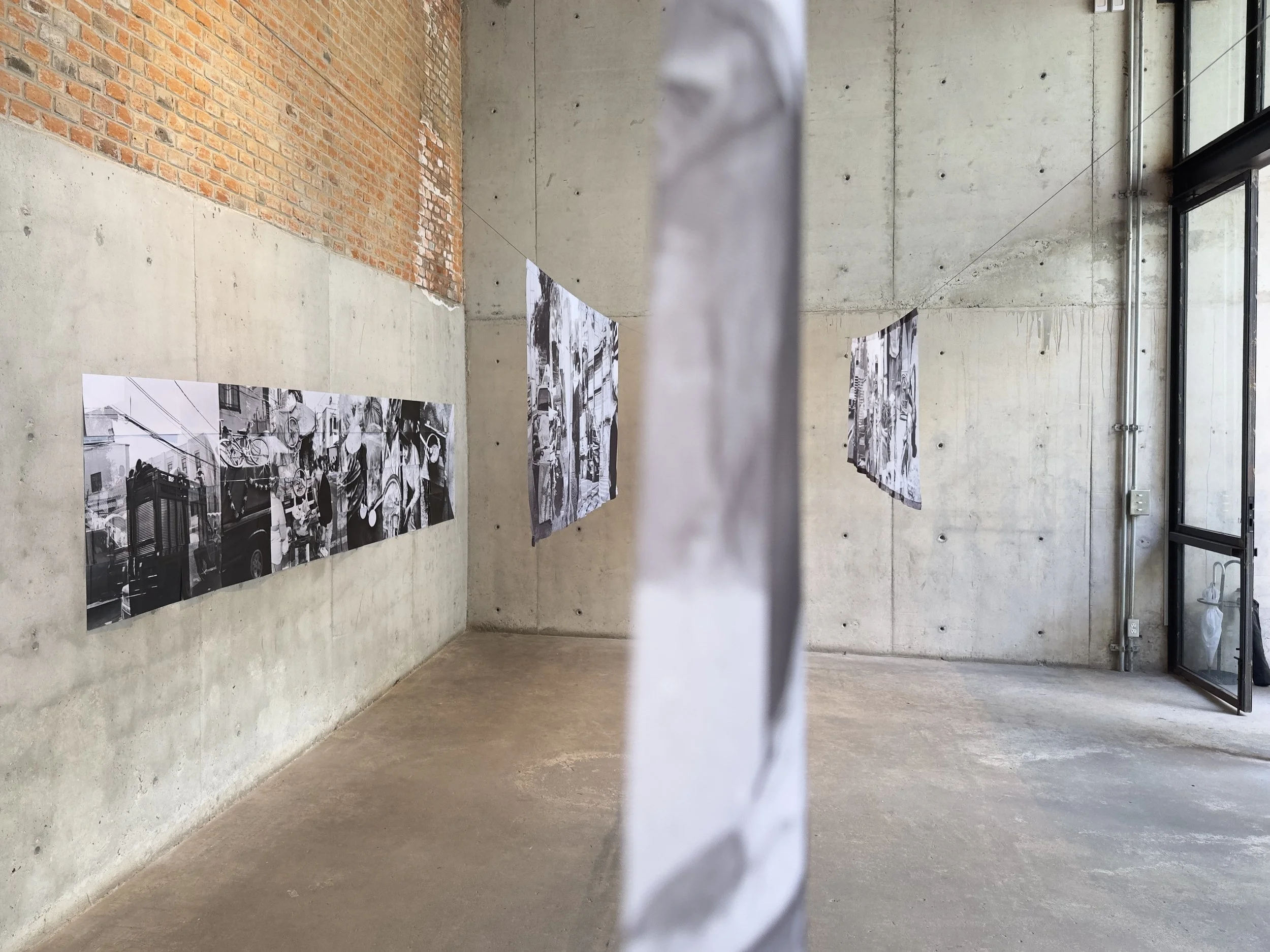
Fundacion Casa Wabi, Mexico City 2026
Curated by Andrea Bustillos Duhart
Projects That Might Interest You.

2. LÄUFT

1.RECORDAR ES VIVIR - ERINNER IST LEBEN